Placeholder for a joint photograph of
Jaroslav and Jiří Frič
Jaroslav and Jiří Frič
Audiovisual Art, Light, Space and Technical Imagination
A Czech audiovisual artist, technician and educator who brought artistic thinking together with electrical engineering, projection, light and spatial experience.
Jaroslav Frič (1924–2000) was a pioneer of Czechoslovak audiovisual art. Artforest remembers him in particular through his family connections — as the father of Jiří Frič and grandfather of Vilém Frič — and as part of a broader story of working with light, technology, images and space.
Family Connections
Three generations, three distinct individuals, and a creative experience naturally passed down through the family.
In the Artforest story, Jaroslav Frič is more than a historical figure. He is the father of Jiří Frič and grandfather of Vilém Frič — the first generation in a creative family line that passed on experience, technical thinking and a feel for light and space.
Jiří Frič worked with his father for many years on major international projects. Their collaboration combined Jaroslav’s audiovisual and technical experience with Jiří’s artistic and sculptural approach. Vilém Frič now builds on this family experience through his own distinctive artistic practice.
Creativity was not passed down as a ready-made formula. It was shared through experience, collaboration and the courage to seek new paths.
Jaroslav, Jiří and Vilém Frič are three distinct artistic voices, connected by their relationship with material, technology, light, movement and space.
Profil
From electrical engineering to multimedia projects and world exhibitions.
After studying electrical engineering at the Czech Technical University in Prague, Jaroslav Frič initially worked in nuclear physics research. From the 1950s onwards, he focused on creating audiovisual systems and exploring how technology could be combined with artistic experience.
He contributed to projects for EXPO world fairs and developed multimedia concepts based on projection, light, sound and spatial arrangement. His notable projects include the Spherorama and Vertical Cinemascope systems for Expo 1970 in Osaka.
In 1968, he was among the founders of SCARS — science, art, sense — a group devoted to experimental audiovisual work. His approach combined a technician’s precision, an educator’s experience and an openness to artistic experimentation.
light, projection, image, sound, movement
multimedia systems, spatial experience, technical experimentation
world fairs, pavilions, museums, cultural exhibitions
combining technical construction with artistic and scenographic imagination
Tvorba
Four areas that naturally came together in his work.
Combining multiple images, projection surfaces and sound layers into a single spatial composition.
Projects for Czechoslovak and international pavilions at EXPO exhibitions in Europe, North America and Asia.
Artistic lighting, projection and the transformation of architecture through technology.
Teaching lighting technology and stage design, and writing specialist texts for art schools.
Selected Projects
A brief selection of key projects illustrating the scope of his international work.
Audiovisual and lighting design for the Czechoslovak pavilion; a period that helped shape internationally recognised Czechoslovak multimedia art.
Work on artistic lighting and the technical design of audiovisual spaces in the Czechoslovak pavilion, including Polyekran, Polyvize and Kinoautomat.
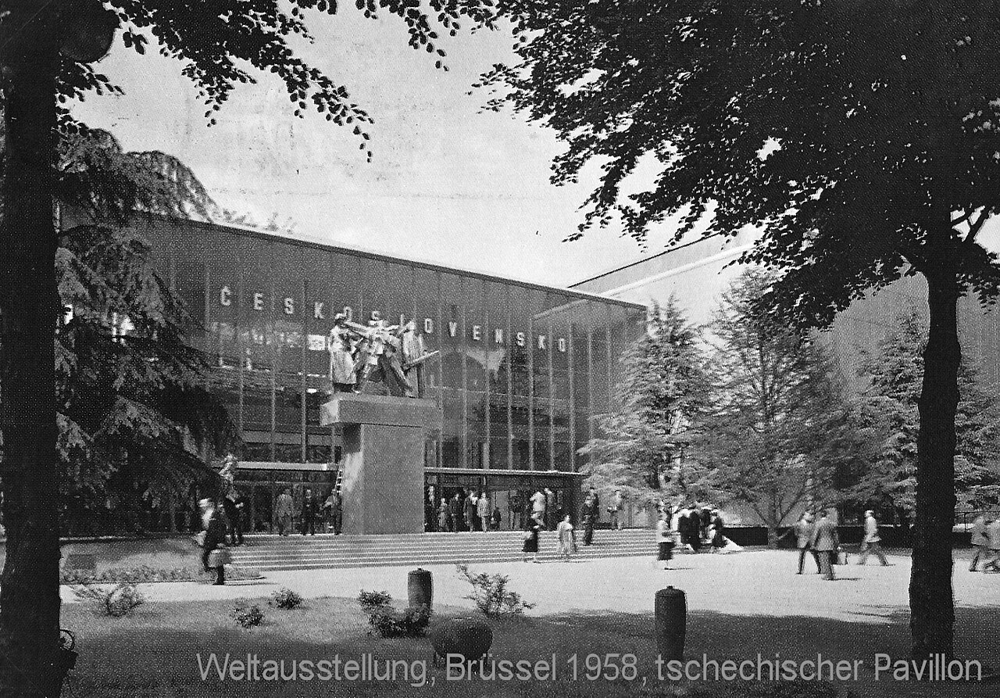
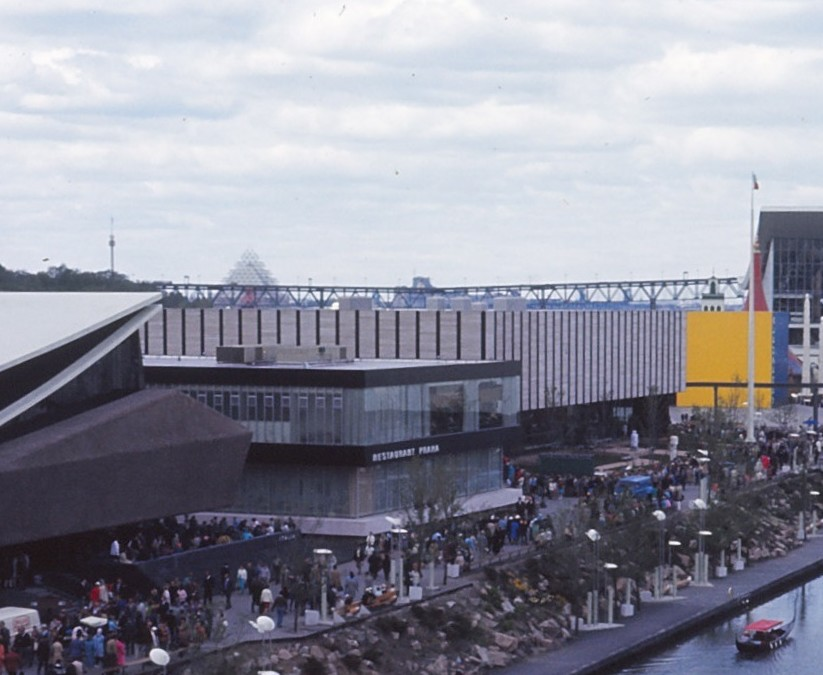 Expo 67 · Československý pavilonView of the Czechoslovak pavilion grounds and Restaurant Prague in Montreal.Temporary image sourced from the public internet.Source ↗
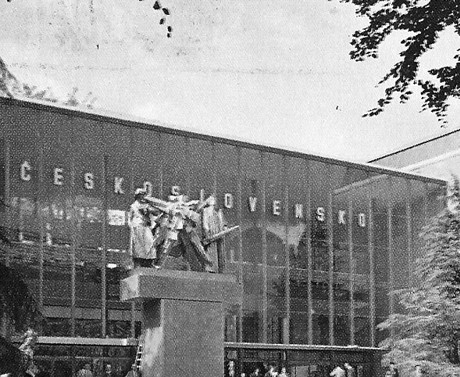
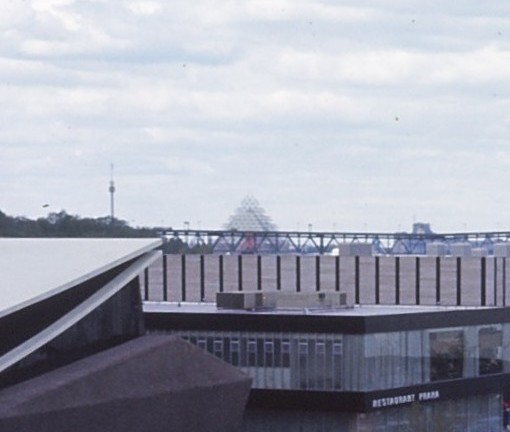 Expo 67 · Restaurace PragueA closer crop of the pavilion, showing its architecture and spatial arrangement in greater detail.Crop from a publicly available photograph.Source ↗
The Spherorama and Vertical Cinemascope multimedia projects for the British Columbia pavilion, along with other audiovisual programmes at the world fair.
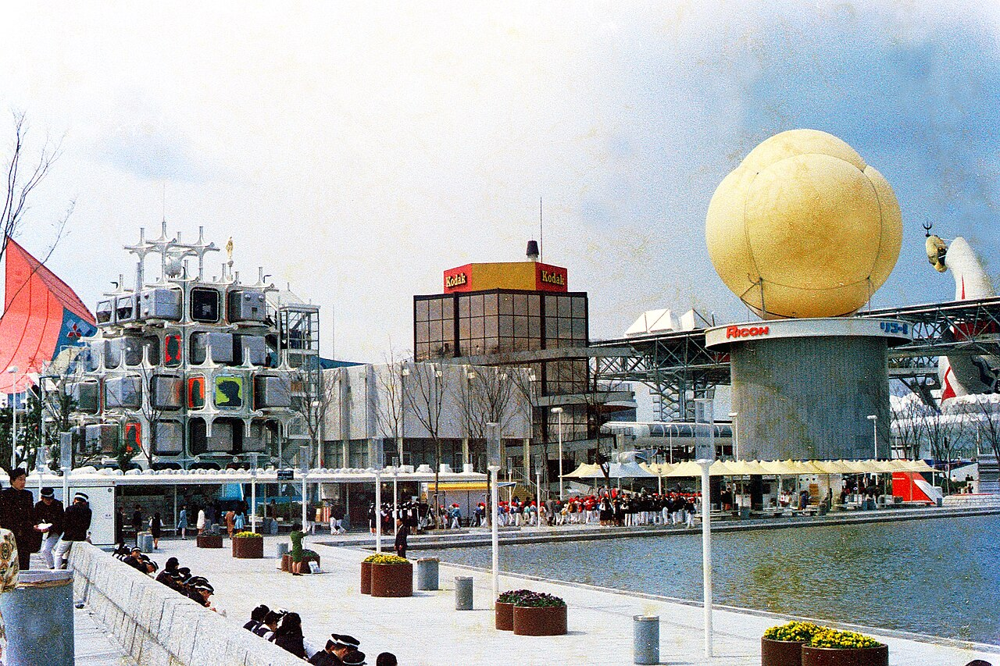 Expo 70 · OsakaA period view of the Expo ’70 pavilions in Osaka, used as visual context for this stage of his career.Temporary image sourced from the public internet.Source ↗
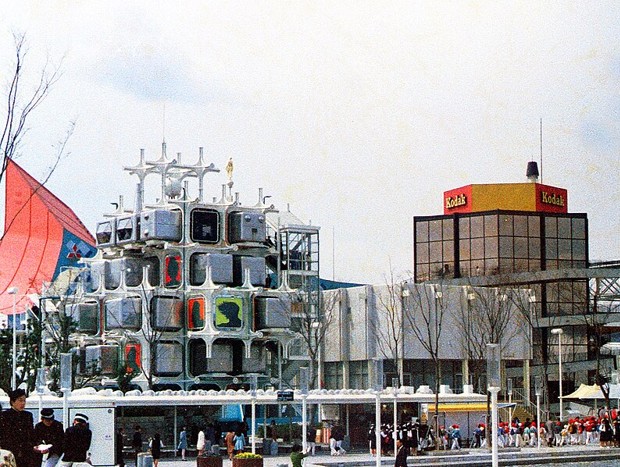 Expo 70 · Pavilion DetailsA detailed crop of the pavilions and exhibition atmosphere to complement this section.Crop from a publicly available photograph.Source ↗
Large-scale audiovisual presentations and multimedia projects developed through Art Centrum based on concepts by Jaroslav Frič.
A glass light installation and fountain created in collaboration with Jiří Frič. This project illustrates the direct professional collaboration between father and son.
A collaboration with Jiří Frič for the Indira Gandhi memorial — a significant project connecting two generations of the Frič family. According to a report by České noviny, the glass River was initiated by Jaroslav Frič and created together with his son Jiřím Fričem vytvořili unikátní památník z českého olověného křišťálového skla, onyxu a nerezové oceli.
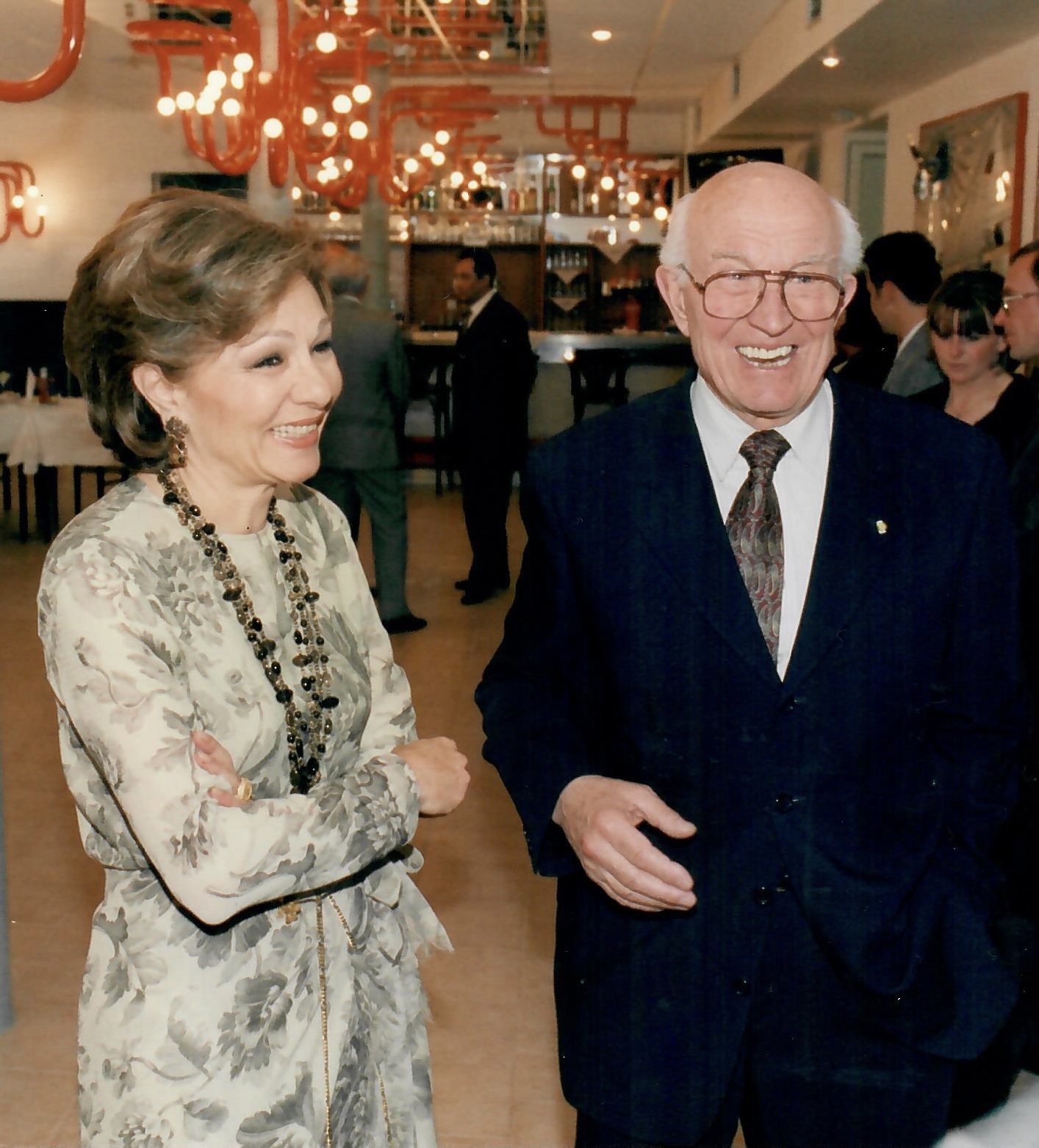
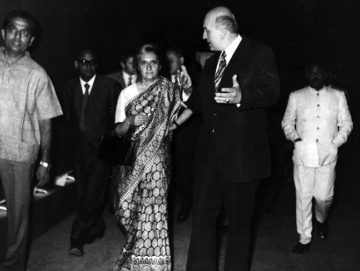 Indira Gandhi and Jaroslav FričPeriod photograph related to the memorial and project in New Delhi.Image supplied by the user for the page preview.
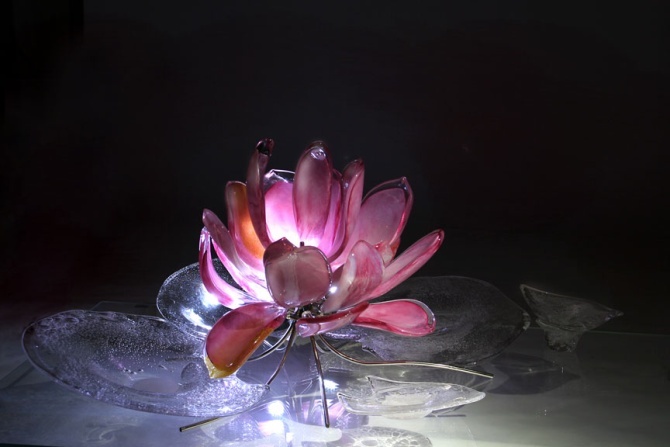 glass River · LotusDetail of the lotus element / light object used as a second visual reference for this project.Image supplied by the user for the page preview.
External Link
A fuller biography, list of projects, specialist publications, teaching activities and other public information are available in the separate encyclopaedia entry.
Open WikipediaThe Next Generations
Two distinct artists featured in Artforest’s current presentation.