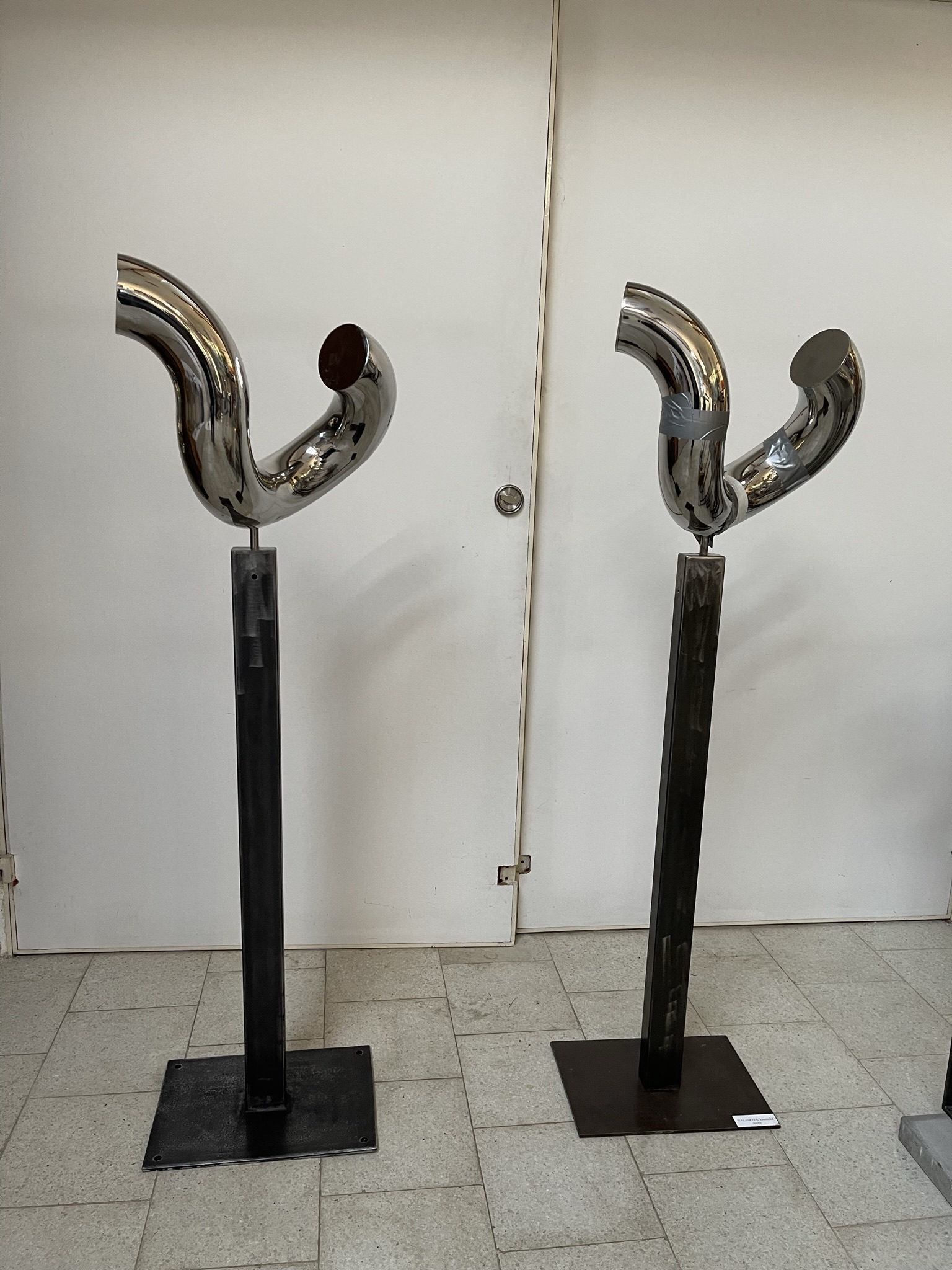
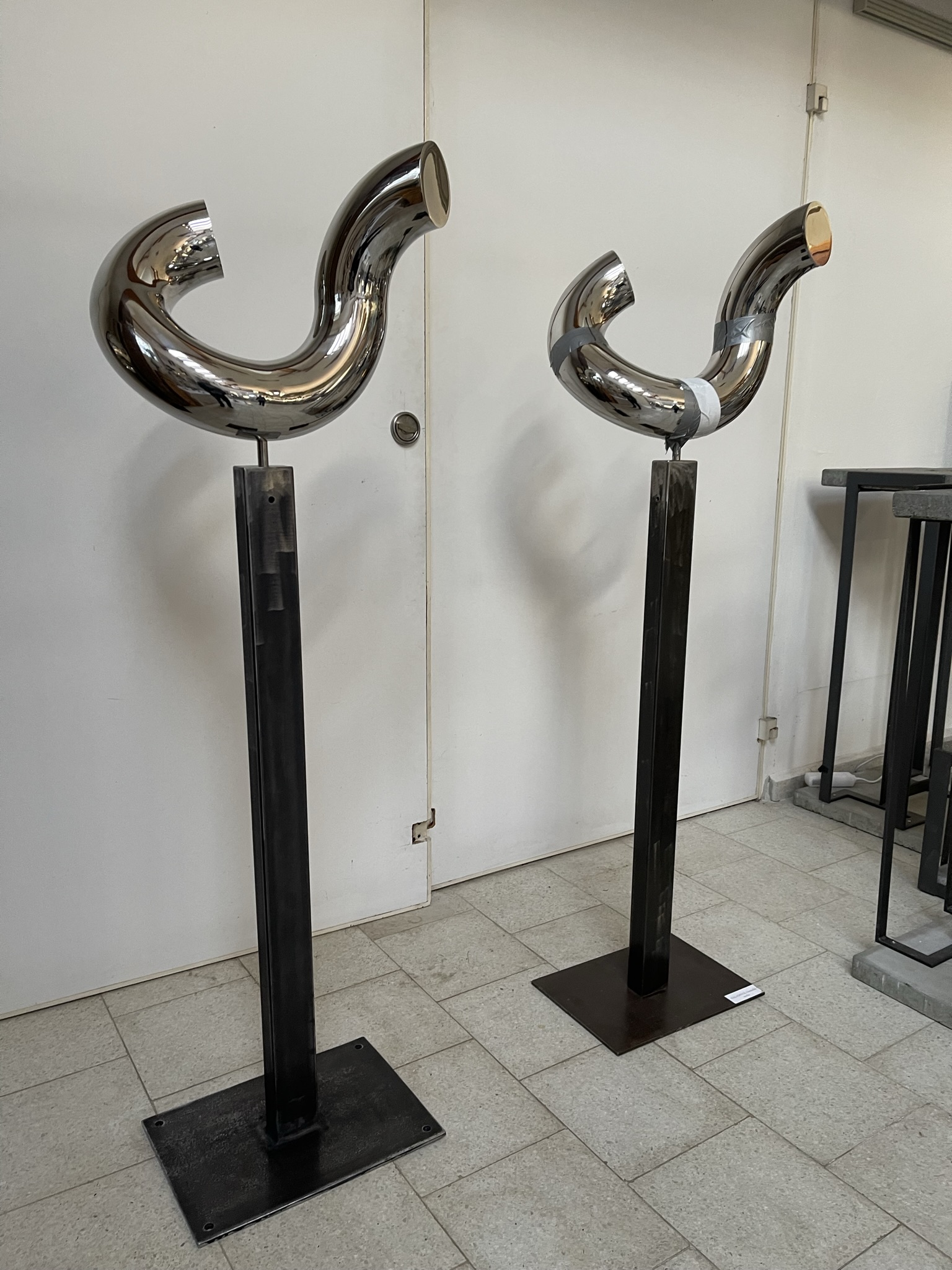
The basic geometric visual language of Good Mood follows the kinetic object Moody by Jiří Frič.
Moody is based on playfulness, transformation, and freedom of form, which the owner can change according to their own mood. Vilém Frič, however, does not repeat its meaning. He adopts a related visual language and views the question of transformation from a different angle: from many possibilities, he selects a single form for a specific place together with the future owner.
The artist determines the visual language of the work – geometric segments, their proportions, and the rules of rectangular rotation that define the possibilities of the composition. The owner enters this system by choosing a specific arrangement. Upon completion, the shape is fixed and immutable, becoming a personal trace of a certain moment – a record of a thought, feeling, and story preserved in time.
This shift is characteristic of Vilém Frič. He returns to a theme not to repeat it, but to re-examine it from a different perspective and find his own artistic solution. At the same time, the polished stainless steel keeps the fixed composition visually fluid through the reflection of light, space, and the viewer.
In Life in Motion, the shape again remains fixed, but actual movement returns as the kinetic principle of the entire object. The theme of time, human interaction, and transformation thus continues in another form.

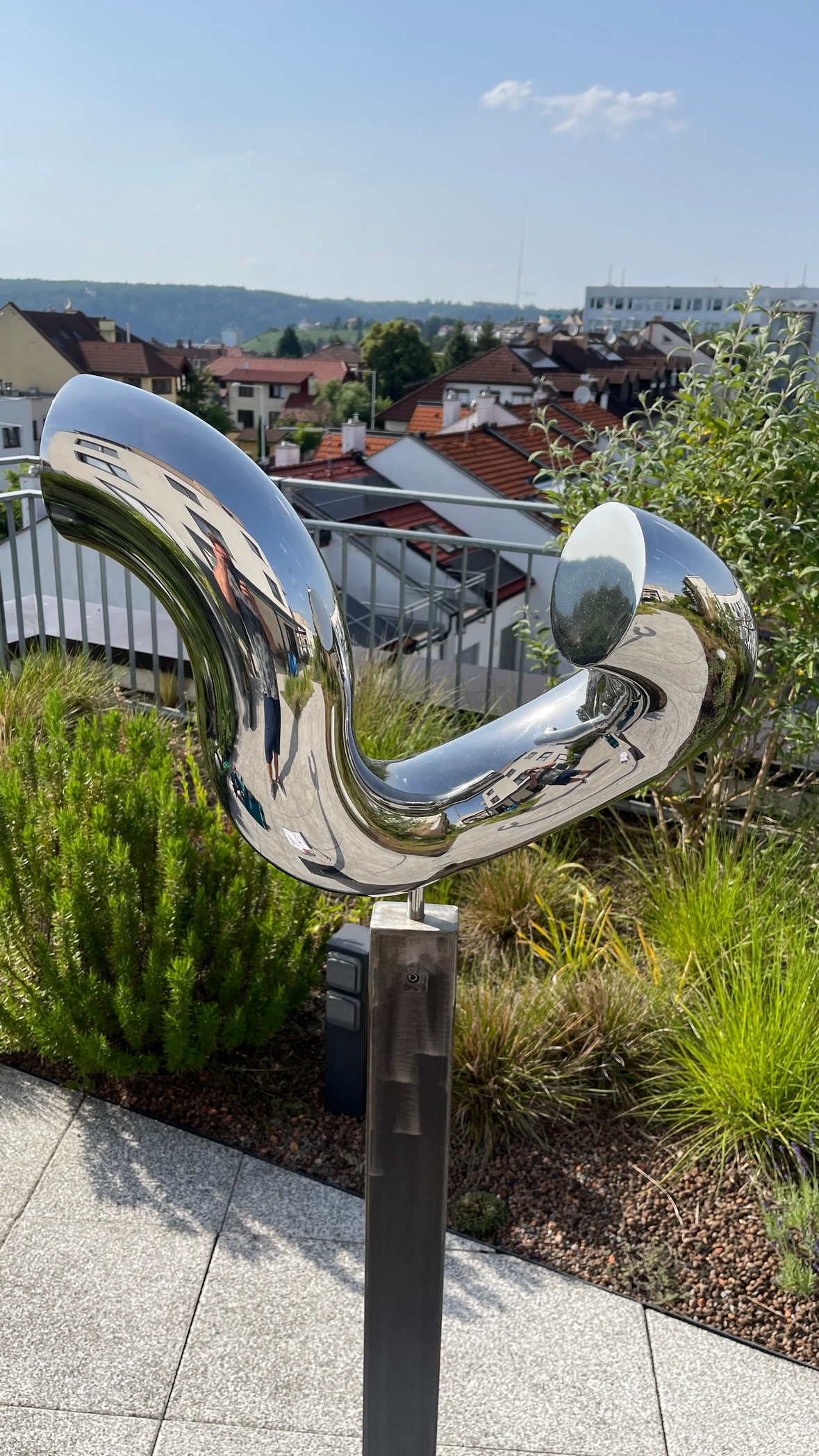
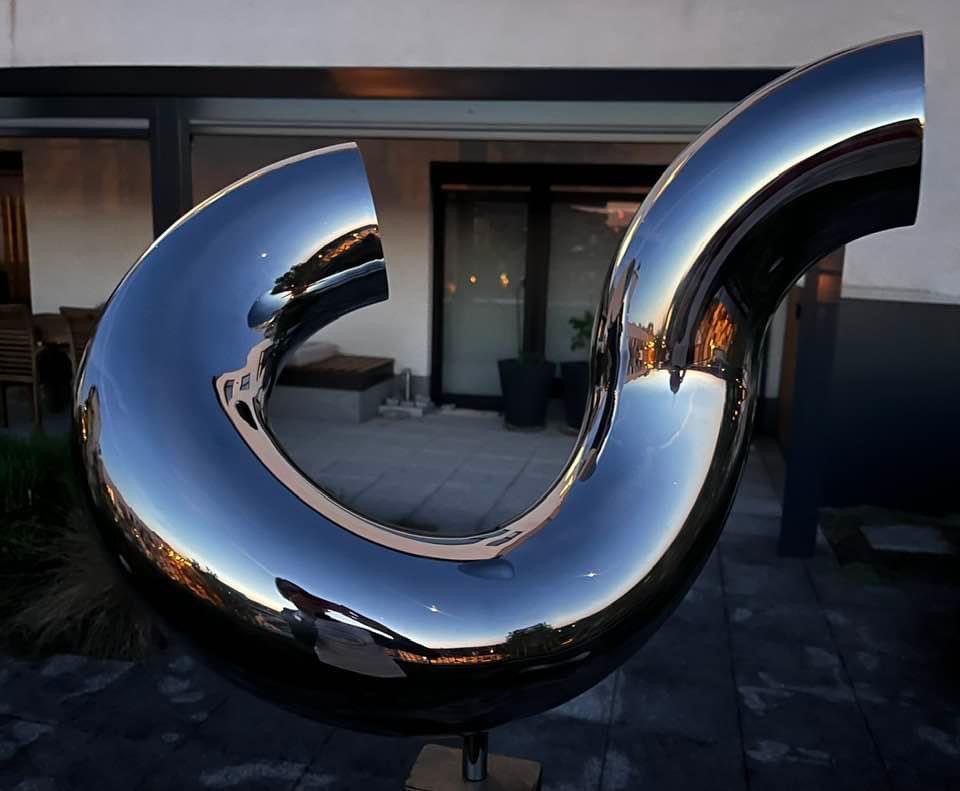
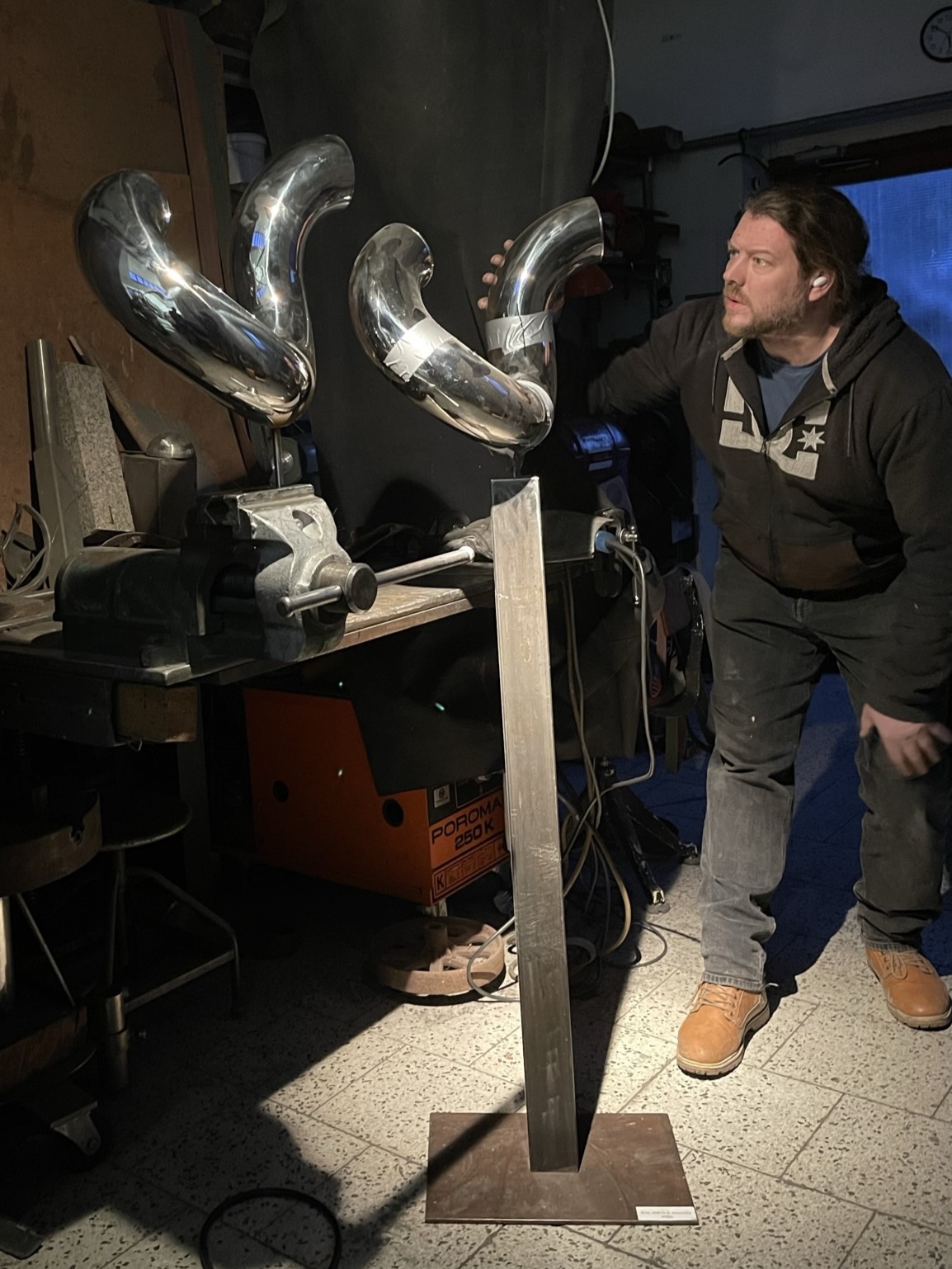
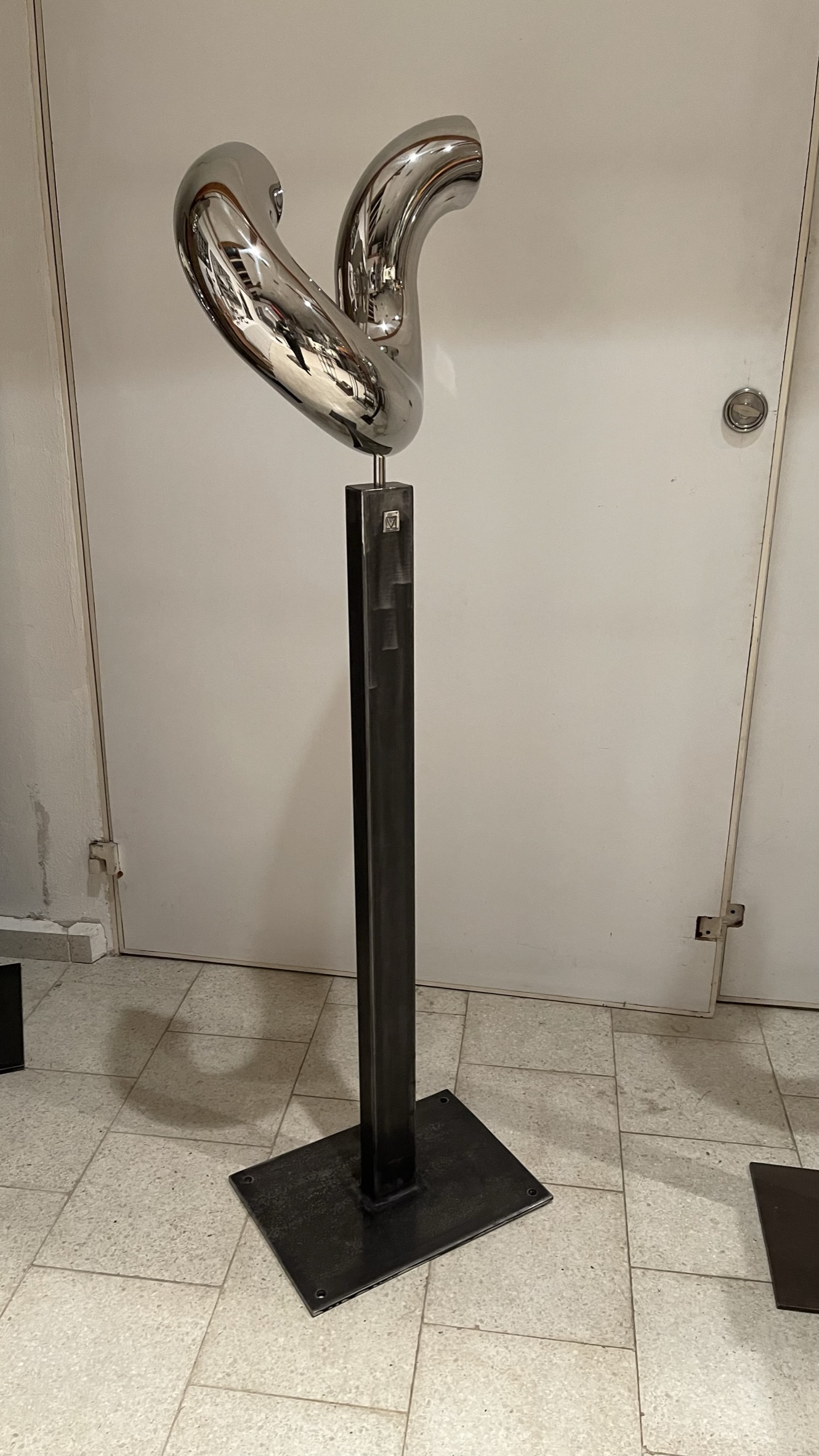
 "/>