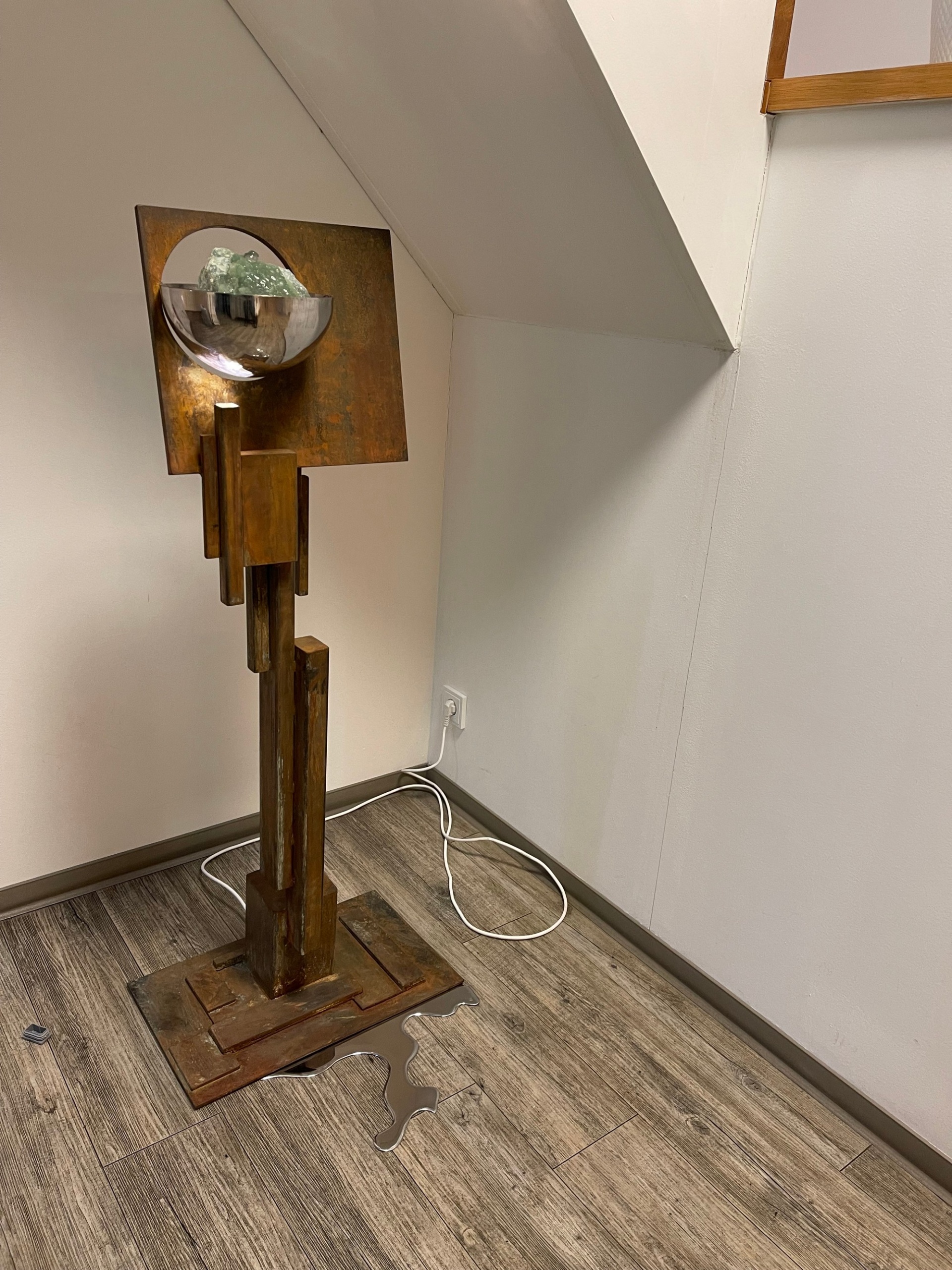
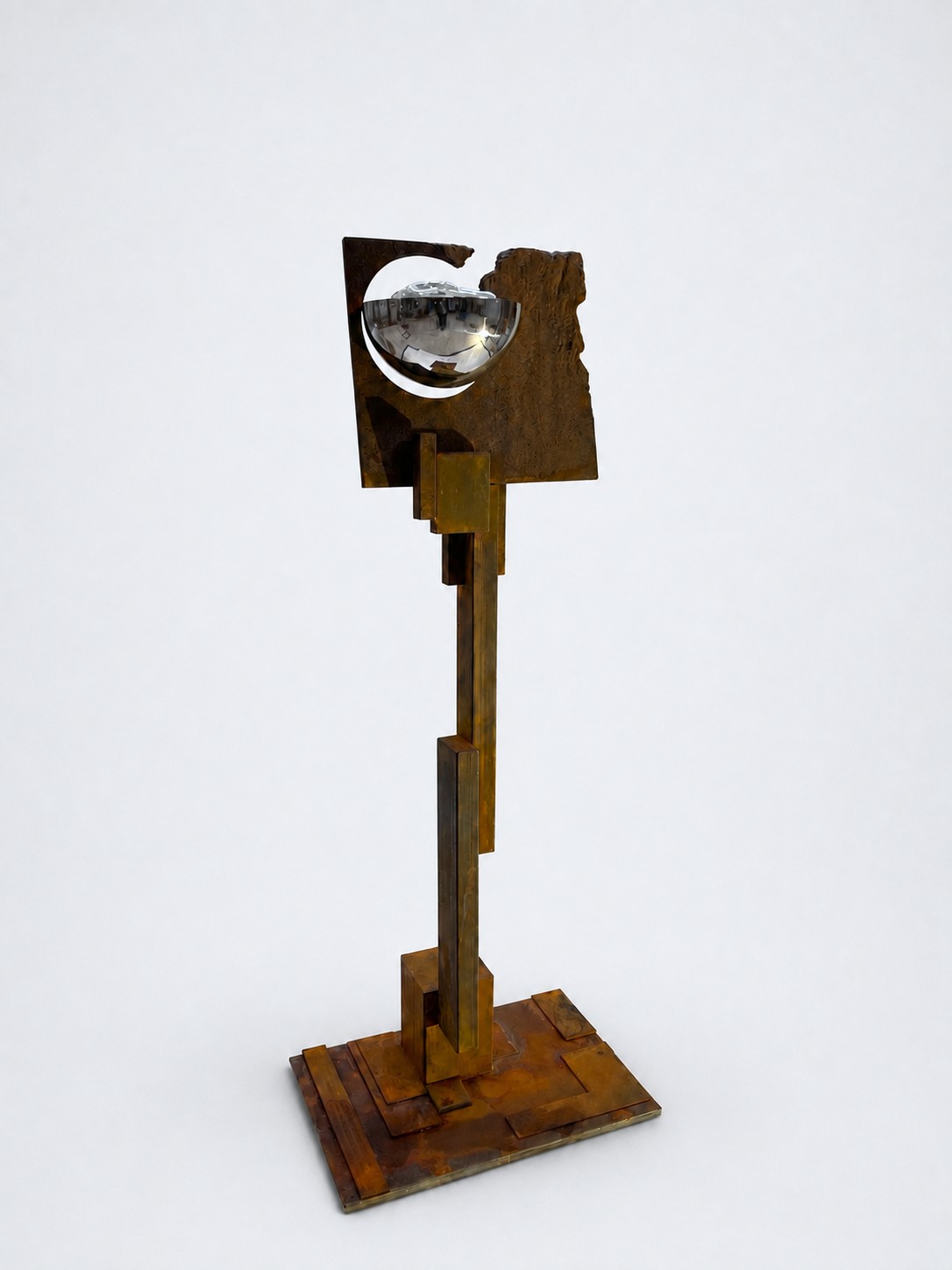
Olympus represents a significant transition between intimate light objects and Vilém Frič's later work with the fountain as a fully realized sculptural medium.
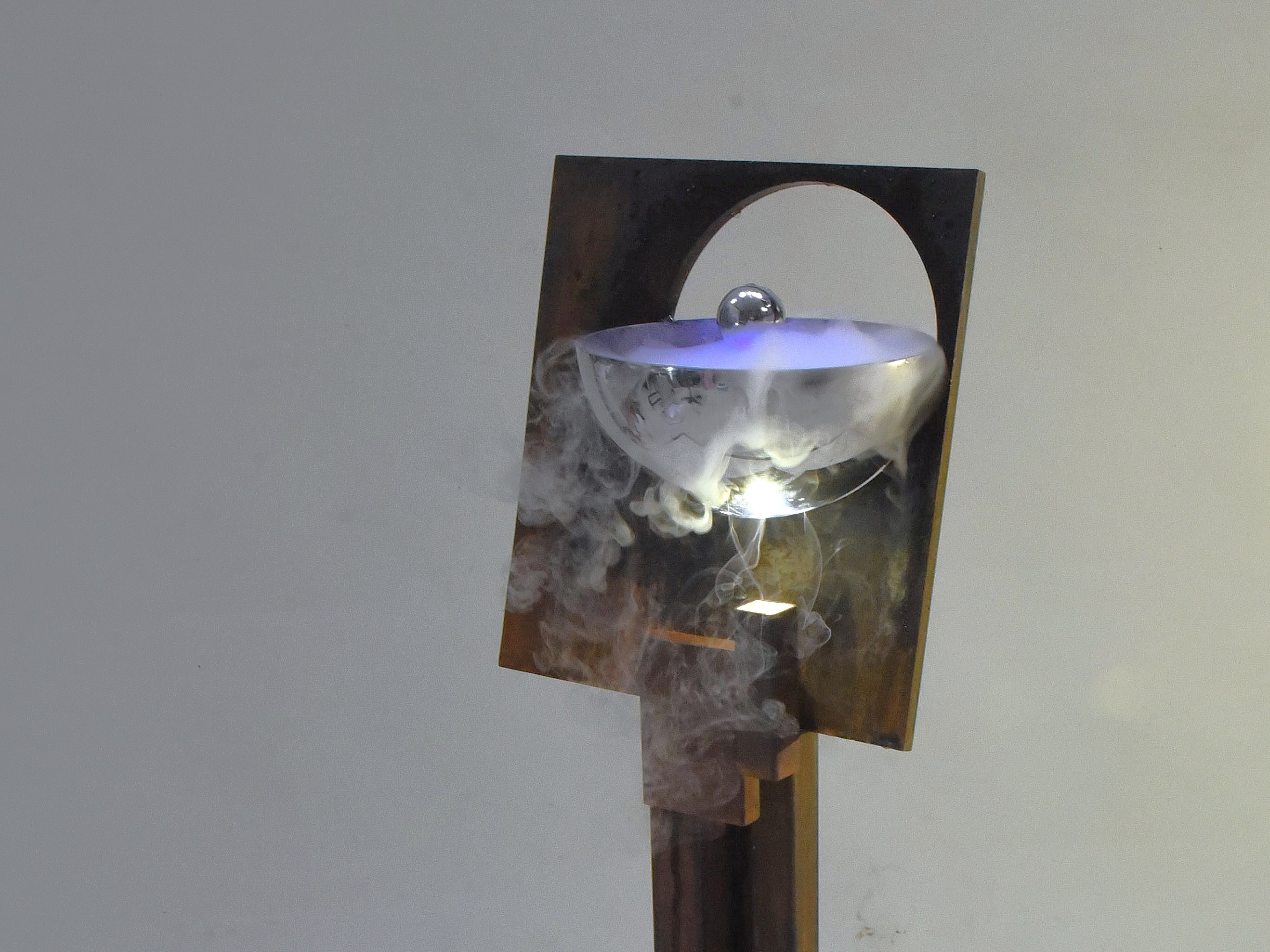
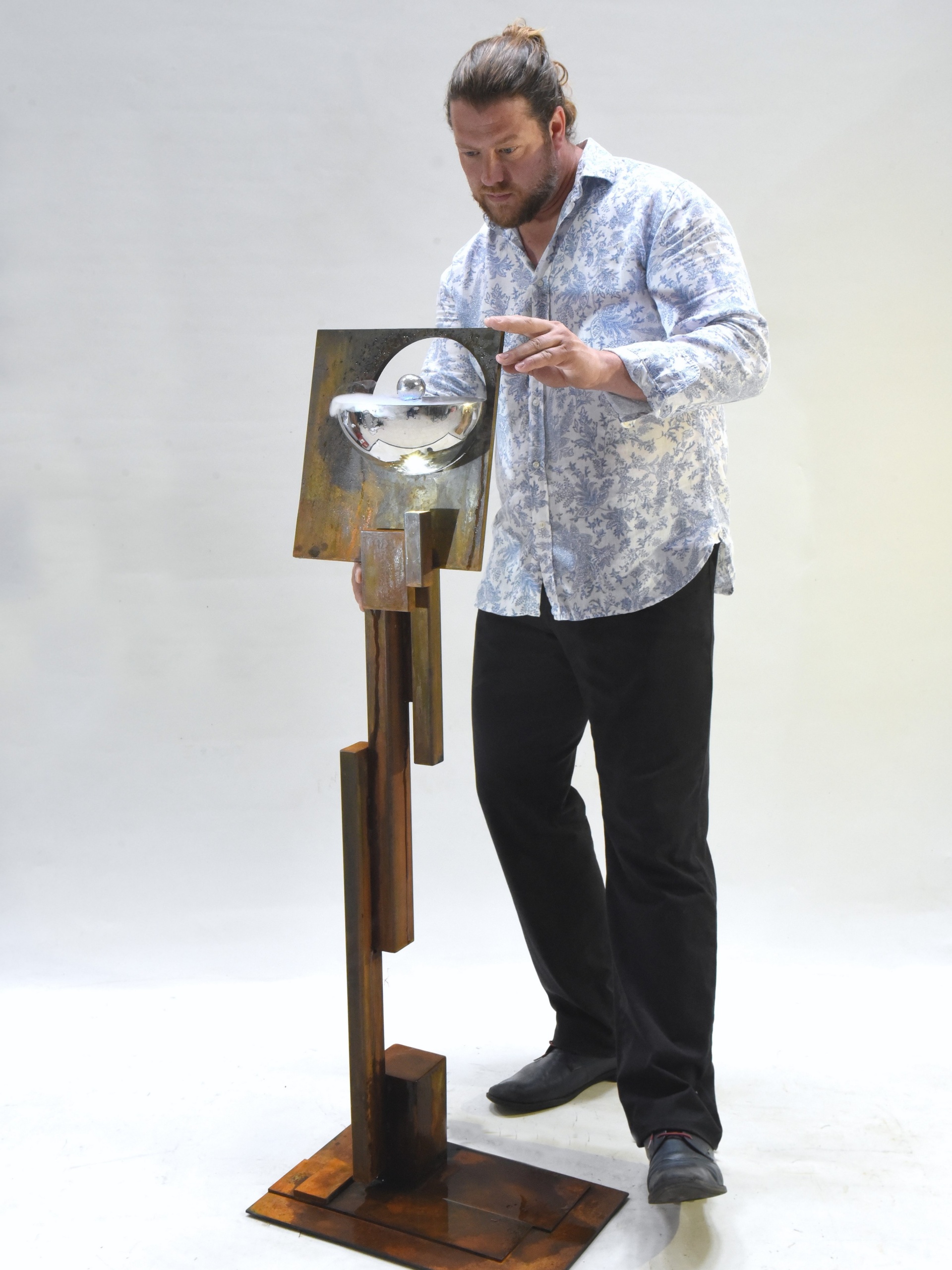
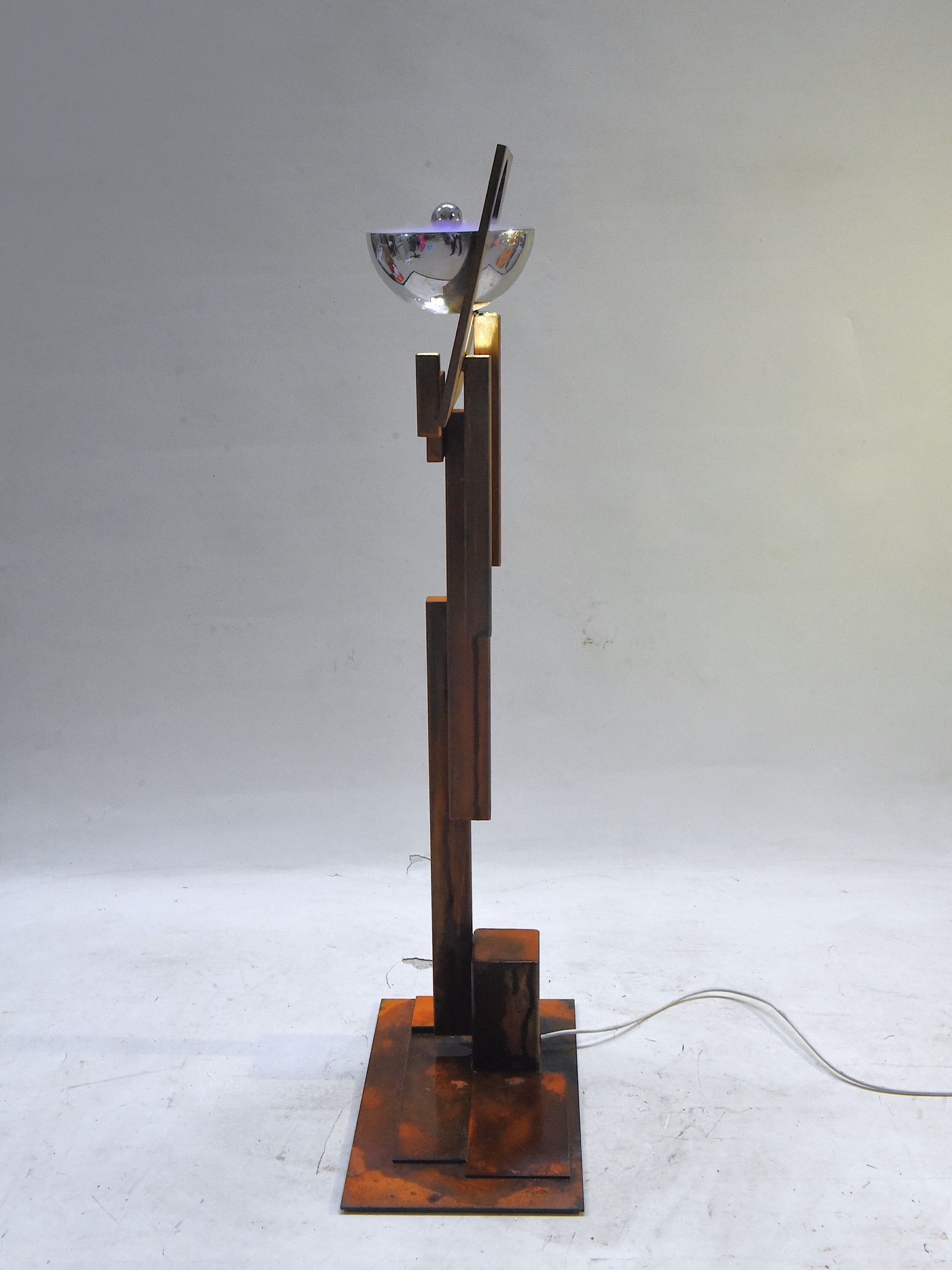
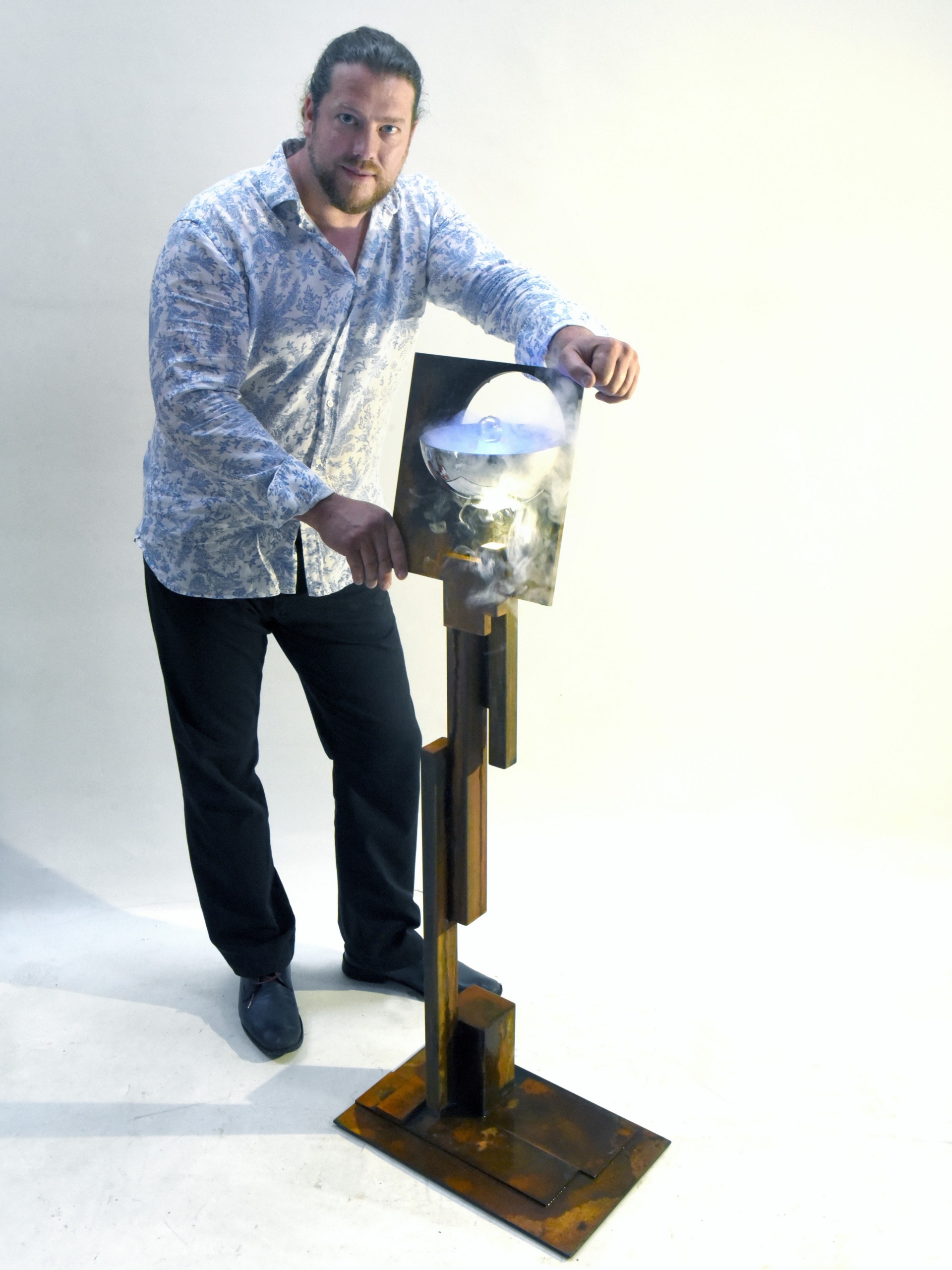
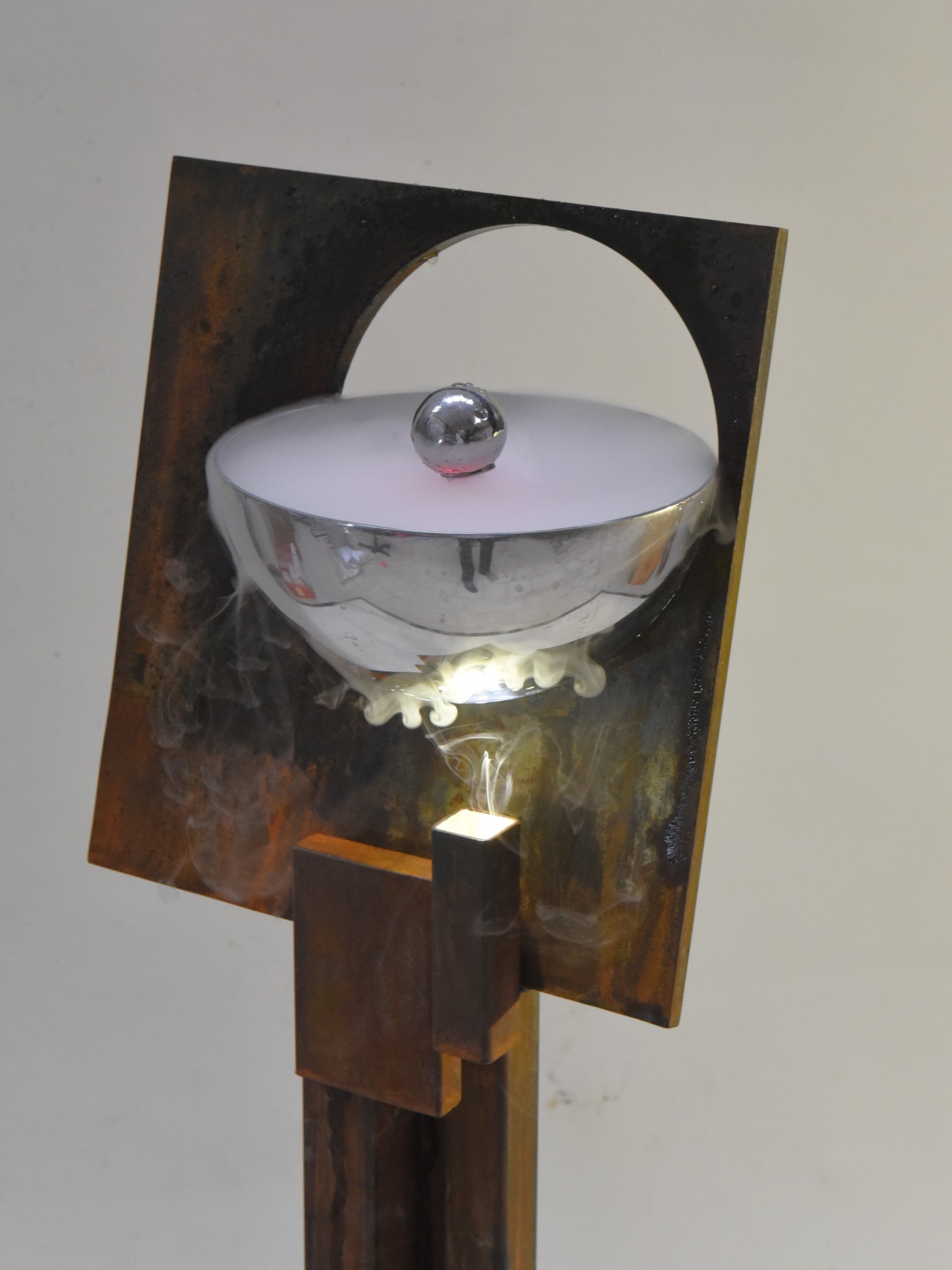
The industrial structure feels solid and rational, while water, light, crystal, and water vapor introduce movement, fluidity, and transience. This contrast between stable order and the living element becomes an integral part of the work’s character.
Technical circuits, pumps, lighting, and water lines recede behind the resulting experience; their role is to facilitate the movement of water, the reflection of light, and the presence of mist, rather than drawing attention to themselves. It is here that Frič’s technical-artistic reasoning merges with a scenographic perception of space. The object is not merely a form, but a situation perceived through sight, movement, sound, and shifting light.
Olympus also demonstrates how the artist transfers a conceptual framework across different media: from light sculpture and design to the fountain, where story, function, and space merge into a single whole. This path continues in subsequent industrial fountains, no longer needing to return to the theme of Greek mythology.
Olympus thus closes one chapter while opening another: the form changes, but the method of seeking meaning and its artistic expression remains.


 "/>
 "/>
 "/>
 "/>
 "/>
 "/>
 "/>